Hard water in DFW is real, and it is not 12 to 20 grains.
Hardness runs from about 5 grains in Mansfield to about 11.8 in the cities on district water. Here is what that means for your plumbing, what it costs you, and what each of the fourteen cities we serve publishes.
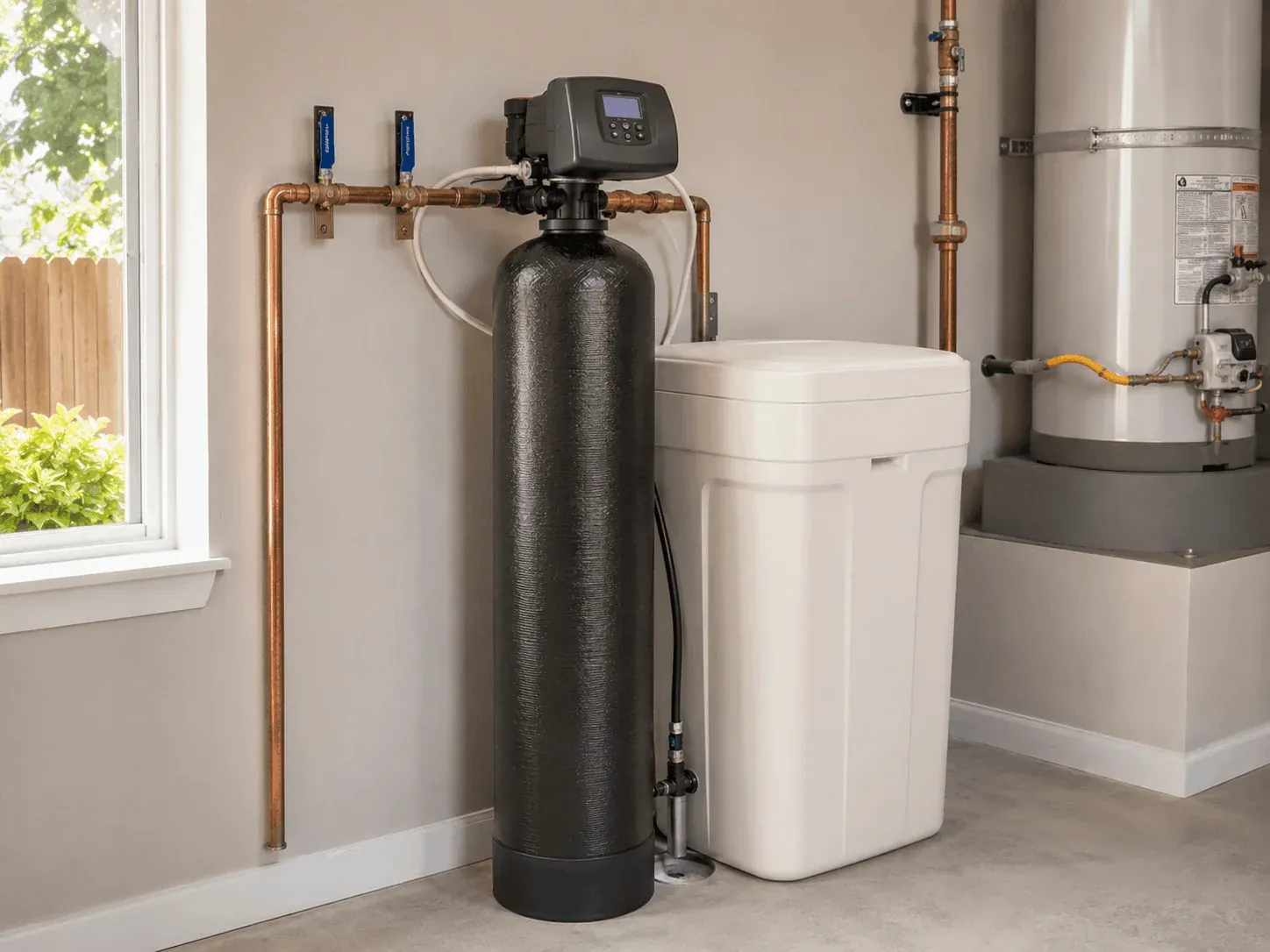
Do I need a water softener in Dallas?
Probably, and a smaller one than you might expect. Reporting citing Dallas Water Utilities puts hardness around 140 to 160 mg/L, roughly 8 to 9 grains per gallon. That is above the 7-grain hard threshold so softening is justified, but it is well below the 12 to 20 grains commonly quoted for the region.
What hardness is, in one paragraph.
Hard water is water carrying dissolved calcium and magnesium, picked up from rock as the water moves through the environment. Those minerals are harmless to drink. What they do is precipitate out wherever water is heated or evaporates, which is why scale appears inside water heaters, on aerators, on shower screens and on glassware. They also react with soap before it can clean, which is why hard water needs more detergent for the same result.

What hardness costs a household
None of it announces itself. It just gets slowly more expensive.
The regional figure is wrong in both directions.
Across the fourteen cities we serve, published hardness runs from about 5 grains in Mansfield to about 11.8 in the cities on district supply. Fort Worth reports 7 to 10. Four cities publish nothing at all. That spread is the reason a single regional number is not much use for sizing anything.
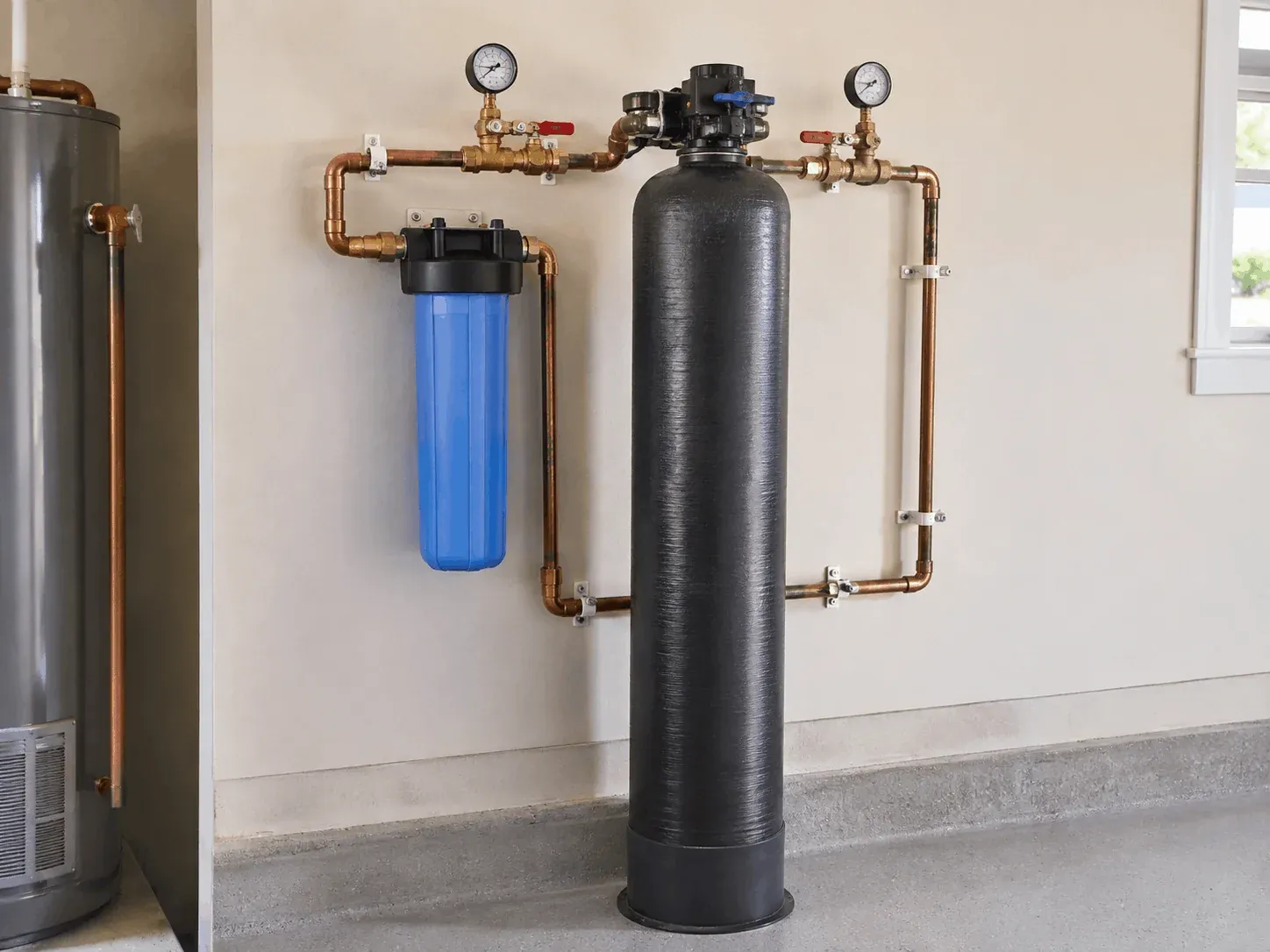
Mansfield publishes 90 to 120 mg/L, about 5 to 7 grains, moderately hard. Fort Worth reports 100 to 171 mg/L, about 6 to 10 grains. The North Texas Municipal Water District reports up to 202 mg/L, about 11.8 grains by its own conversion, which is very hard. Six of the fourteen publish no number at all, so in those we size to your house instead.
| City | Published hardness | Classification |
|---|---|---|
| Dallas | 8 to 9 grains | Hard |
| Fort Worth | 6 to 10 grains | Moderately hard to hard |
| Plano | 11.8 grains | Very hard |
| Frisco | 11.8 grains | Very hard |
| Allen | 11.8 grains | Very hard |
| Coppell | Dallas supply | Follows the Dallas profile |
| Carrollton | Test first | No city figure published |
| Grand Prairie | Three sources | Varies by neighborhood and by season |
| Southlake | 6 to 10 grains | Moderately hard to hard |
| Colleyville | Test first | Follows the Tarrant County supply |
| Grapevine | 6.8 to 7.3 grains | Moderately hard to hard |
| Mansfield | 5 to 7 grains | Moderately hard |
| Anna | Blended supply | Groundwater and surface water mixed |
| Melissa | 455 ppm dissolved solids | Blended supply, so the regional hardness figure does not apply |
Answered before you ask.
What counts as hard water?
Above roughly 7 grains per gallon, about 120 mg/L as calcium carbonate, water is classed as hard. Below about 3.5 grains it is soft. Several of the cities we serve sit directly on that 7-grain line, which is why a measurement matters more than a classification.
Is hard water bad for you?
Calcium and magnesium in drinking water are not a health concern. Hardness is a cost and nuisance problem: scale in appliances, more detergent, spotting and shorter equipment life. That is the honest case for softening, and it does not need to be dressed up as a health risk.
Is there one hardness figure for the whole metroplex?
No, and that is the useful part. Each city here is on a different supply. Some treat their own water, some buy it finished, and three blend in their own groundwater. The figure that matters for your house is the one measured at your tap.
Get your own figure, not the regional one.
We size the softener to your home, not to a regional average. Free quote, one price.