How hard is the water in Melissa?
Drinking water systems, whole house filtration and softeners installed in Melissa. The supply comes from two district plants plus a city well, and dissolved solids are reported at 455 ppm, the highest across our fourteen cities. That is a drinking water question first.
Blended supply, so the regional hardness figure does not apply
How hard is Melissa water?
Because dissolved solids are reported at 455 ppm in the district data, the highest figure across the fourteen cities we serve. That is a drinking and cooking water question first, and it is the one category neither a softener nor a carbon filter reduces.
Melissa’s water, measure by measure.
Melissa doesn’t sit on one supply. The city buys from two different district plants that draw from different lakes, and it runs its own Woodbine Aquifer well on top of that. With dissolved solids reported at 455 ppm, the useful conversation here is about what you drink. Dissolved solids are the one thing neither a softener nor a carbon filter reduces, which is why a membrane at the kitchen tap does more for a Melissa home than another whole house system would.
Buys from two district plants and runs a well of its own.
Groundwater from the Woodbine Aquifer.
Two plants drawing from different lakes.
The highest figure across the fourteen cities we serve.
With a highest single result of 3.45 ppm.
pH reported up to 8.8.
Every number here is published by someone.
These figures come from the city or district that treats the water, and we name the report so you can read it yourself.
What this means for your house in Melissa.
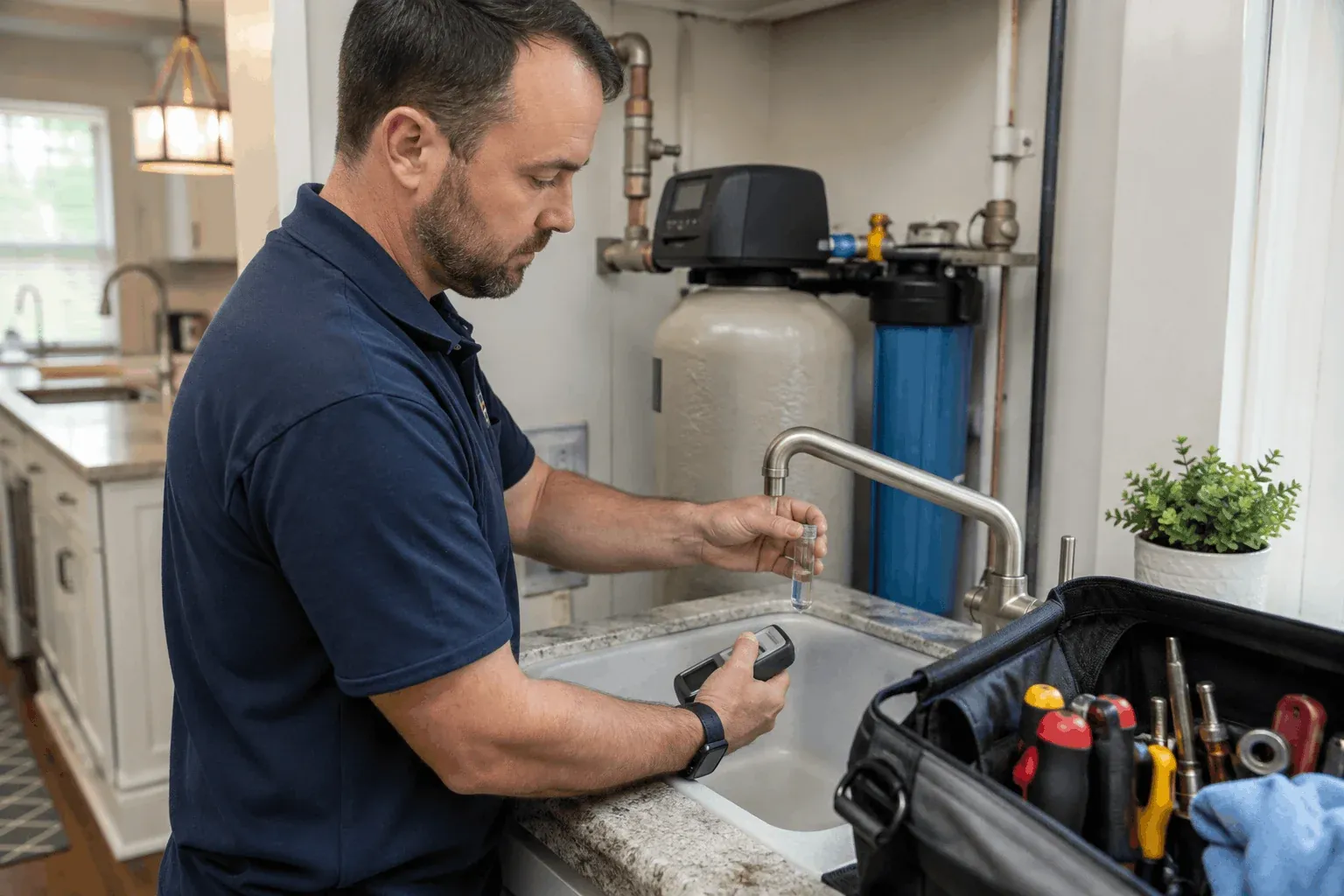
A Consumer Confidence Report describes water leaving a plant or averaged across a distribution system, not water arriving at your address. The free test closes that gap in about twenty minutes.
Asked locally.
Why is drinking water treatment the priority in Melissa?
Because dissolved solids are reported at 455 ppm in the district data, the highest figure across the fourteen cities we serve. That is a drinking and cooking water question first, and it is the one category neither a softener nor a carbon filter reduces.
Would reverse osmosis fix that?
It is the practical residential answer. A membrane rejects the great majority of dissolved solids at the tap it is plumbed to and feeds a dedicated faucet. See reverse osmosis in Melissa.
Do Melissa homes still need a softener as well?
Often, and it does two jobs at once. A softener protects the plumbing and the water heater, and it also extends membrane life considerably by taking hardness out ahead of the reverse osmosis stage. The two are commonly installed together here.
Why does the regional hardness figure not apply in Melissa?
Because the city draws on two different district treatment plants plus its own aquifer well. A single number cannot describe a blended supply, and which plant is feeding your address affects what you get. That is why we measure at the tap.
How long does installation take in Melissa?
About half a day for whole house work, with the water off for two to three hours. An under-sink reverse osmosis station is usually two hours or less, and in Melissa that is often the system homeowners want fitted first.
Do you charge for a quote in Melissa?
No. Quotes are free and carry no obligation. Melissa draws on two district plants plus a city well, so which plant feeds your address affects the reading. Measuring is the only way to size it properly and it costs nothing.
Where can I read Melissa’s own water report?
The source we work from is published at ntmwd.com. That is the source for the figures on this page.
Get your own Melissa reading.
A free quote covers the drinking water system your kitchen needs, which is what this decision turns on.