Water softener or salt-free conditioner?
These are not two versions of the same product. One removes hardness minerals from the water; the other leaves them in and changes how they behave. That difference decides which complaints each can fix.
What is the difference between a water softener and a water conditioner?
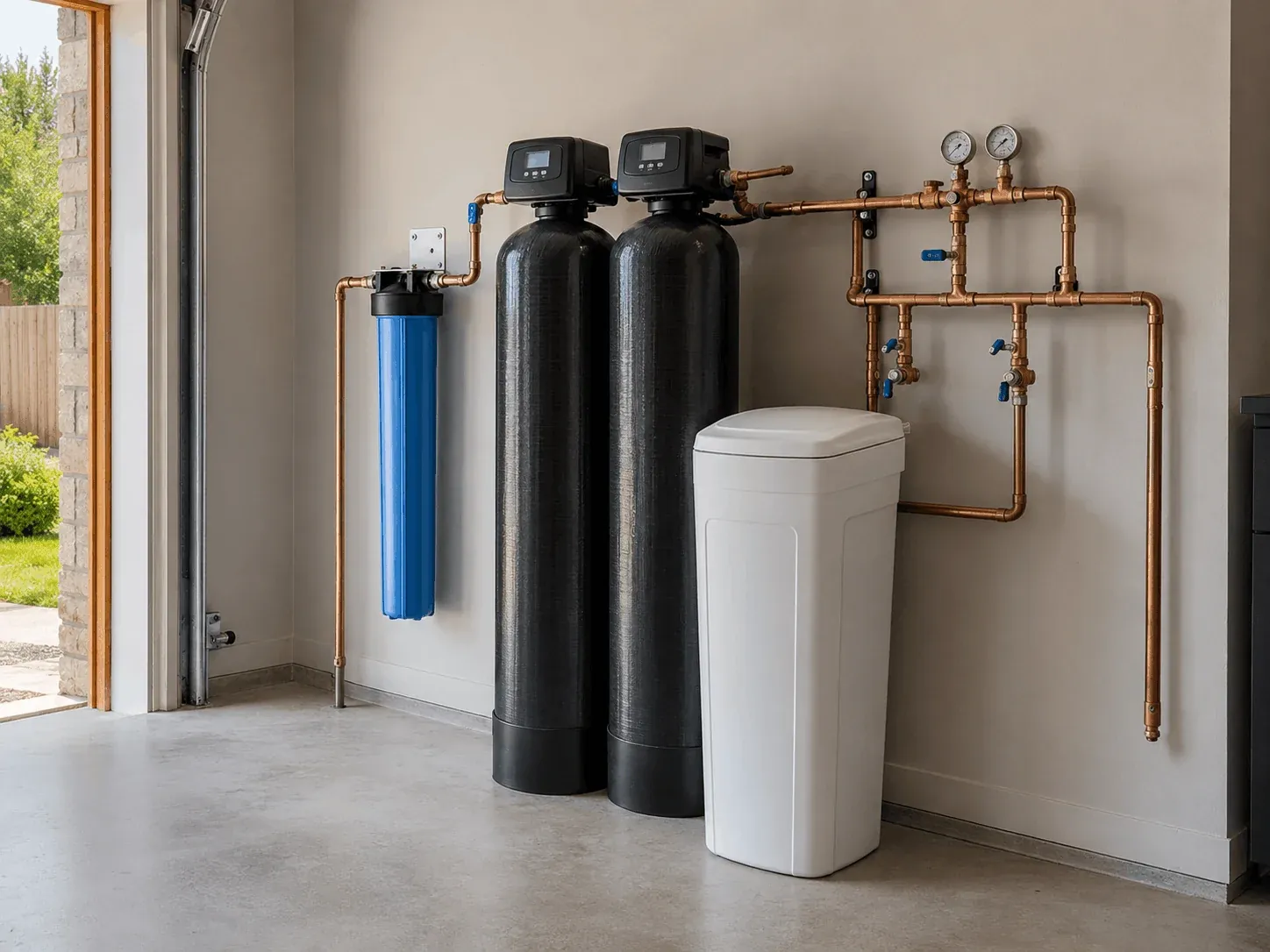
A softener removes calcium and magnesium from the water by ion exchange, so the water leaving it is genuinely soft. A salt-free conditioner leaves those minerals in the water and alters their tendency to form scale on surfaces. Only the softener changes the hardness reading at your tap.
What ion exchange actually does.
A softener runs your water through a resin bed that holds sodium ions and swaps them for the calcium and magnesium it meets. Those minerals leave the water entirely, which is why the hardness reading at your tap changes and why soap starts behaving differently. The bed is rinsed clean on a schedule set by a control valve, and that schedule is what a metered valve keeps honest.
Because the minerals are removed rather than altered, softening is the treatment that addresses scale on heated surfaces, spotting on glassware and the extra detergent hard water demands.
What a salt-free conditioner does instead
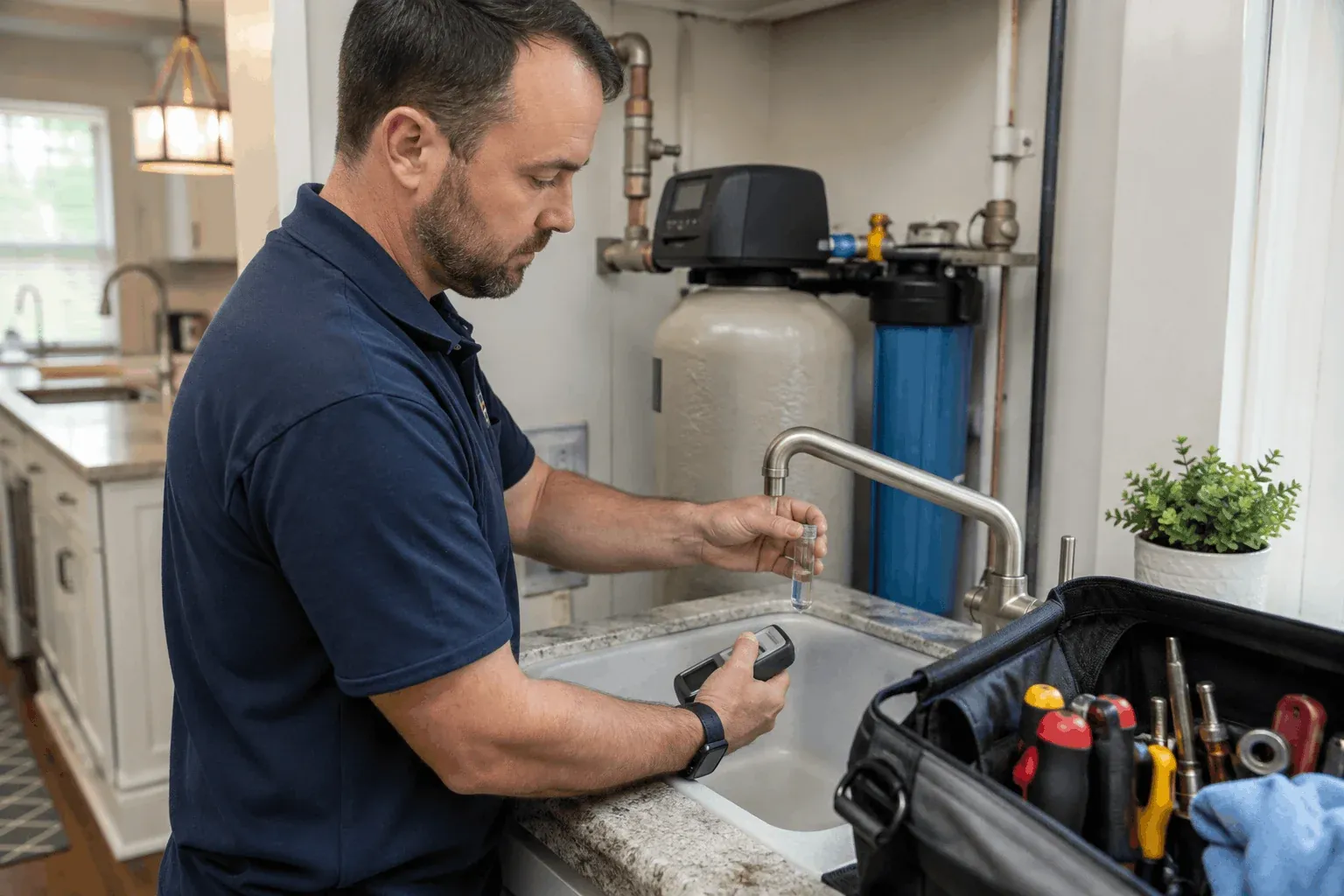
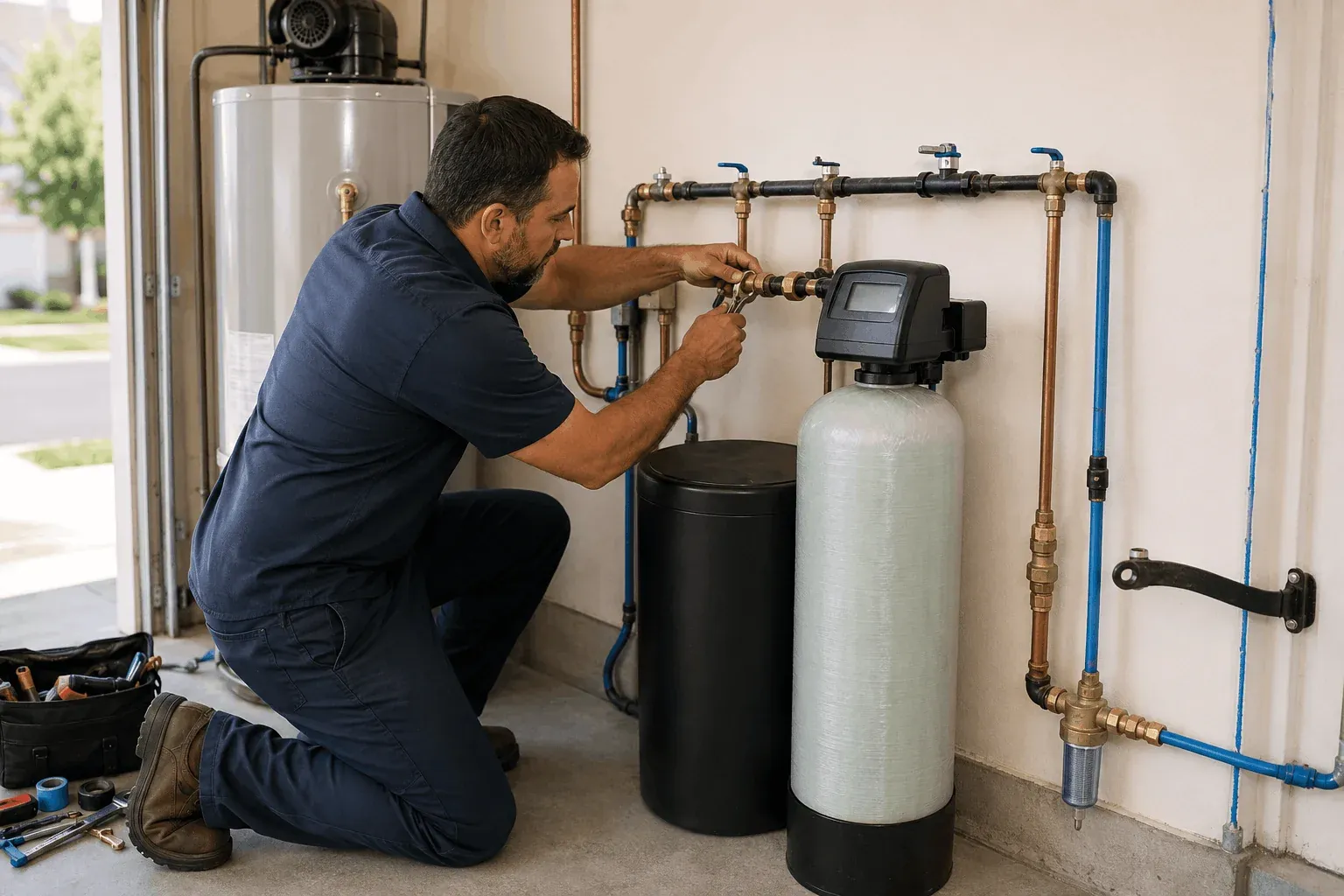
Conditioning is a narrower claim than removal, and it answers a different question. Tell us what your water is doing and we will tell you which of the two you need.
Which one is right depends on the complaint.
If the complaint is spotting on glassware, soap that will not lather, and a water heater working harder than it should, that is hardness in the water and a softener is the only system that removes it.
If your measured hardness is genuinely low, and in Mansfield, Fort Worth and Southlake it often is, then neither product is the priority, and the honest answer is usually filtration for the disinfectant instead.
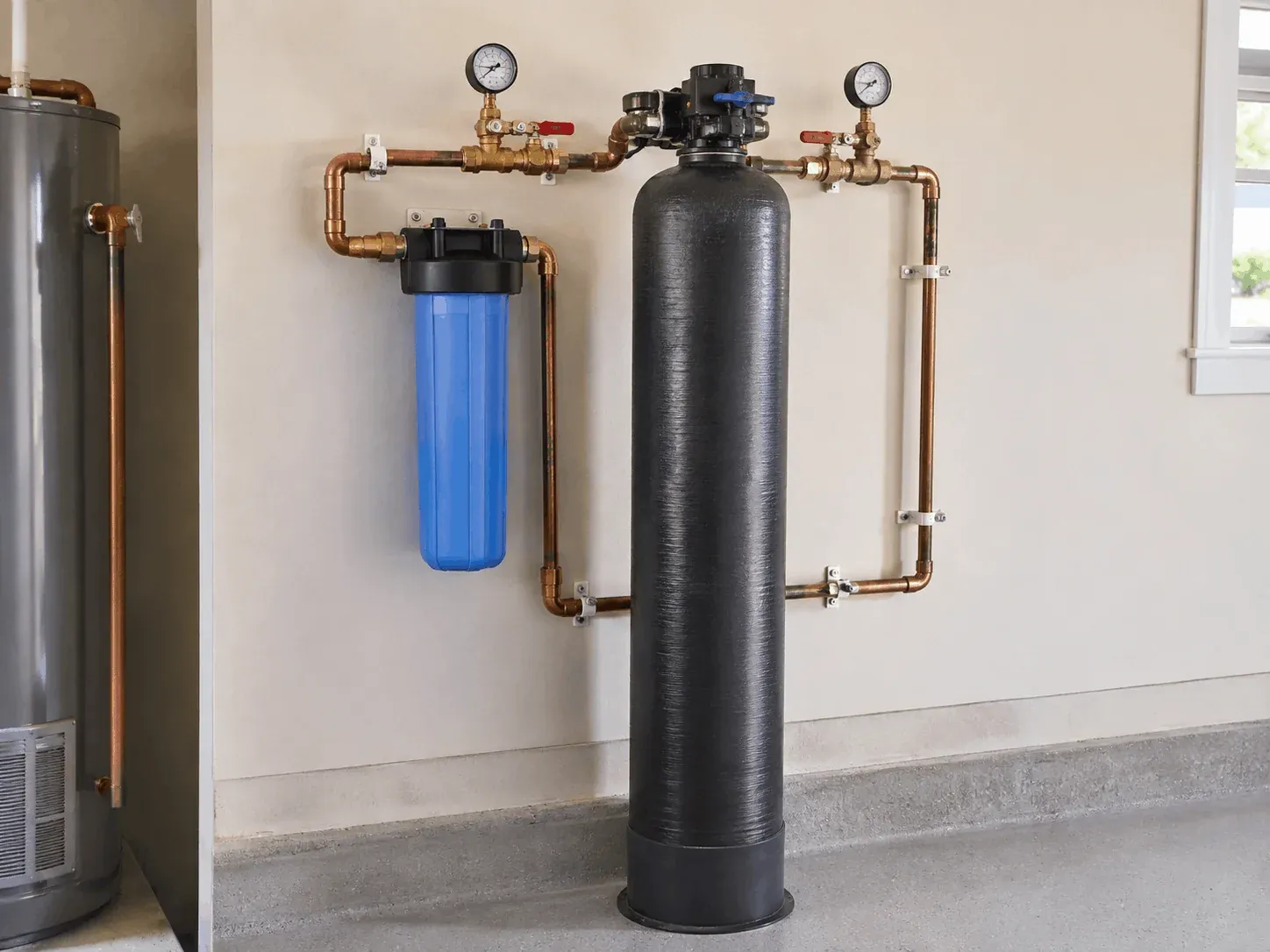
Whether salt-free conditioning equipment is offered is a client decision that has not been confirmed. This page explains the distinction because buyers ask about it; it does not represent an available product line until that is settled.
Answered before you ask.
Do salt-free conditioners work?
They do something different from softening. They do not remove calcium and magnesium, so the hardness reading at your tap is unchanged and soap performance does not improve. What they address is scale adhesion on surfaces, which is a narrower claim than removing hardness.
Which one should I buy in Plano or Frisco?
At around 11.8 grains per gallon those markets have enough hardness for a softener to be justified on scale and soap performance alone. Get the measurement first, because capacity is priced by grains and sizing above your real figure costs you twice.
Is softened water safe to drink?
Ion exchange adds a small amount of sodium proportional to the hardness removed. At DFW hardness levels that is a fraction of what is in a slice of bread. If you want dissolved solids reduced at the drinking tap specifically, that is a reverse osmosis question rather than a softening one.
Settle it with a measurement.
Tell us what your water is doing and we will tell you which of the two you actually need, and what it costs.