Reverse osmosis or whole house filtration?
One treats every tap for disinfectant and odor. The other treats one tap for dissolved solids and contaminants. They solve different complaints, which is why the answer is often both.
Should I get reverse osmosis or a whole house filter?
It depends which complaint you have. Whole house filtration removes chlorine and chloramine at every fixture, so it fixes shower smell and general taste. Reverse osmosis treats one tap and removes dissolved solids, PFAS and lead, which whole house carbon does not. Many homes install both.
What whole house filtration is for.
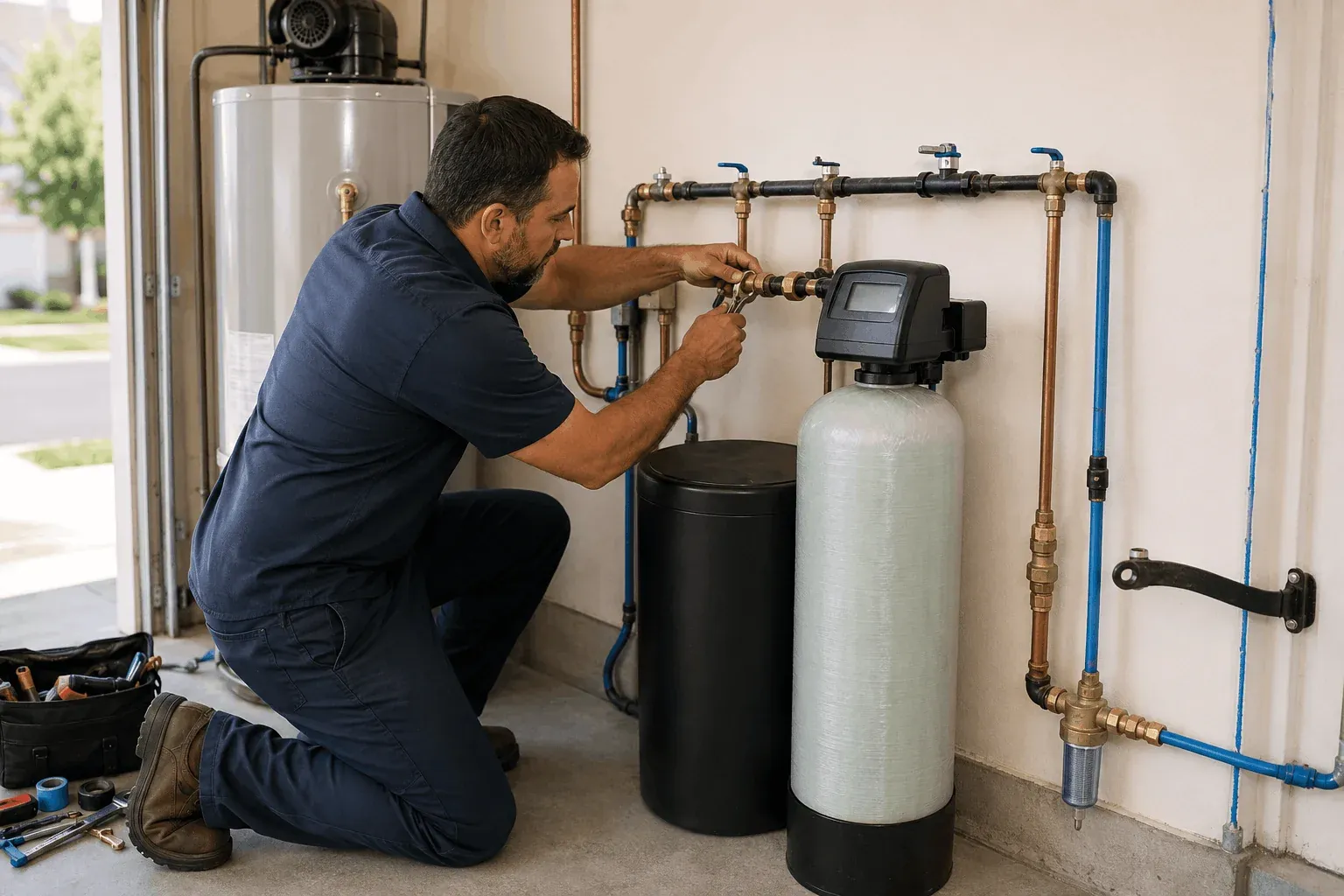
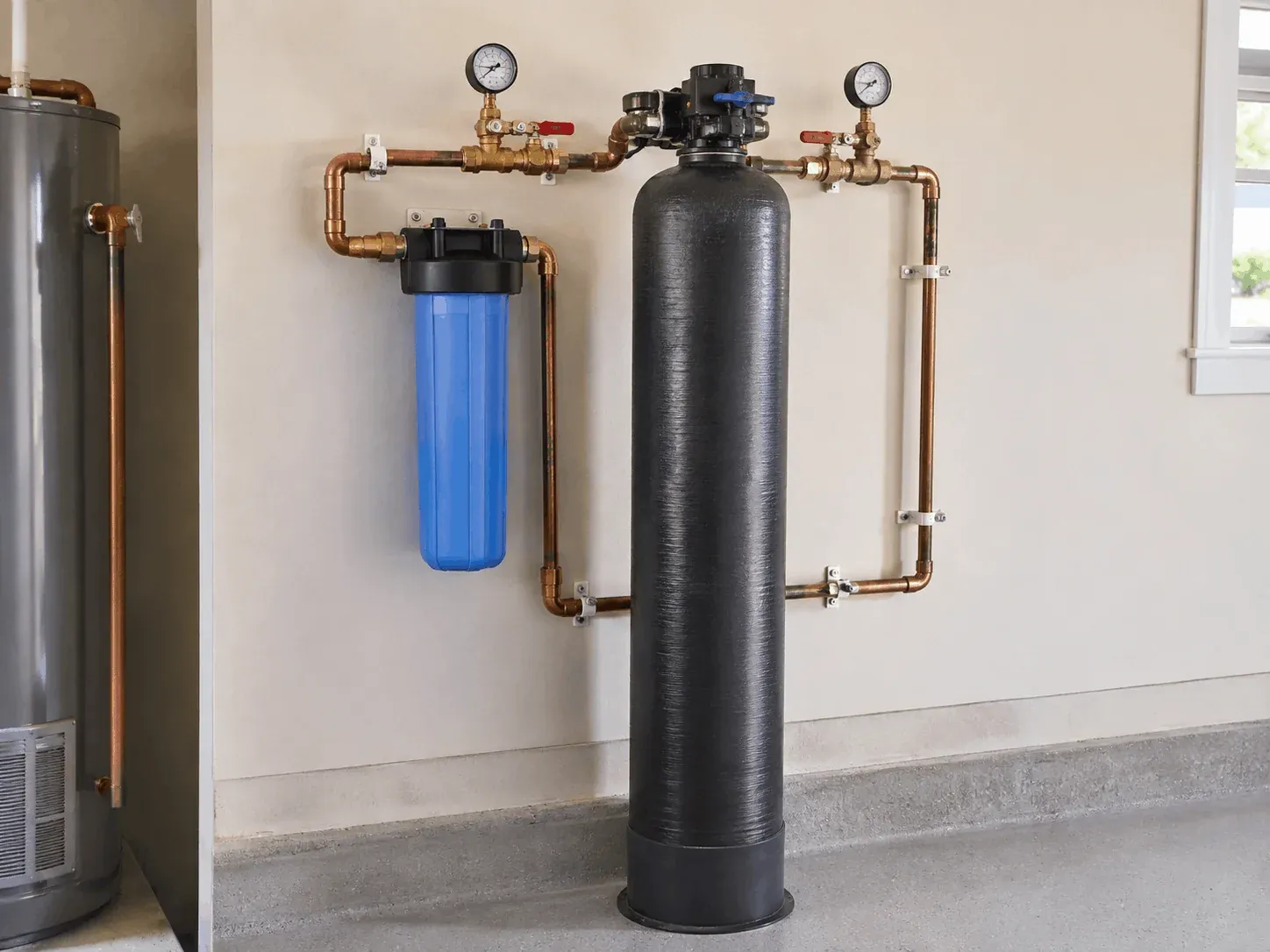
Filtration is plumbed at the point the supply enters the house, so every tap, shower and appliance downstream runs on treated water. Its target is the disinfectant, chlorine, or the chloramine used across most of our service area, plus sediment, taste and odor. That is why it is the treatment that answers a pool smell in a hot shower.
It does not reduce dissolved solids, and it does not remove calcium or magnesium, so scale keeps forming regardless of how good the filtration is.
What reverse osmosis is for.
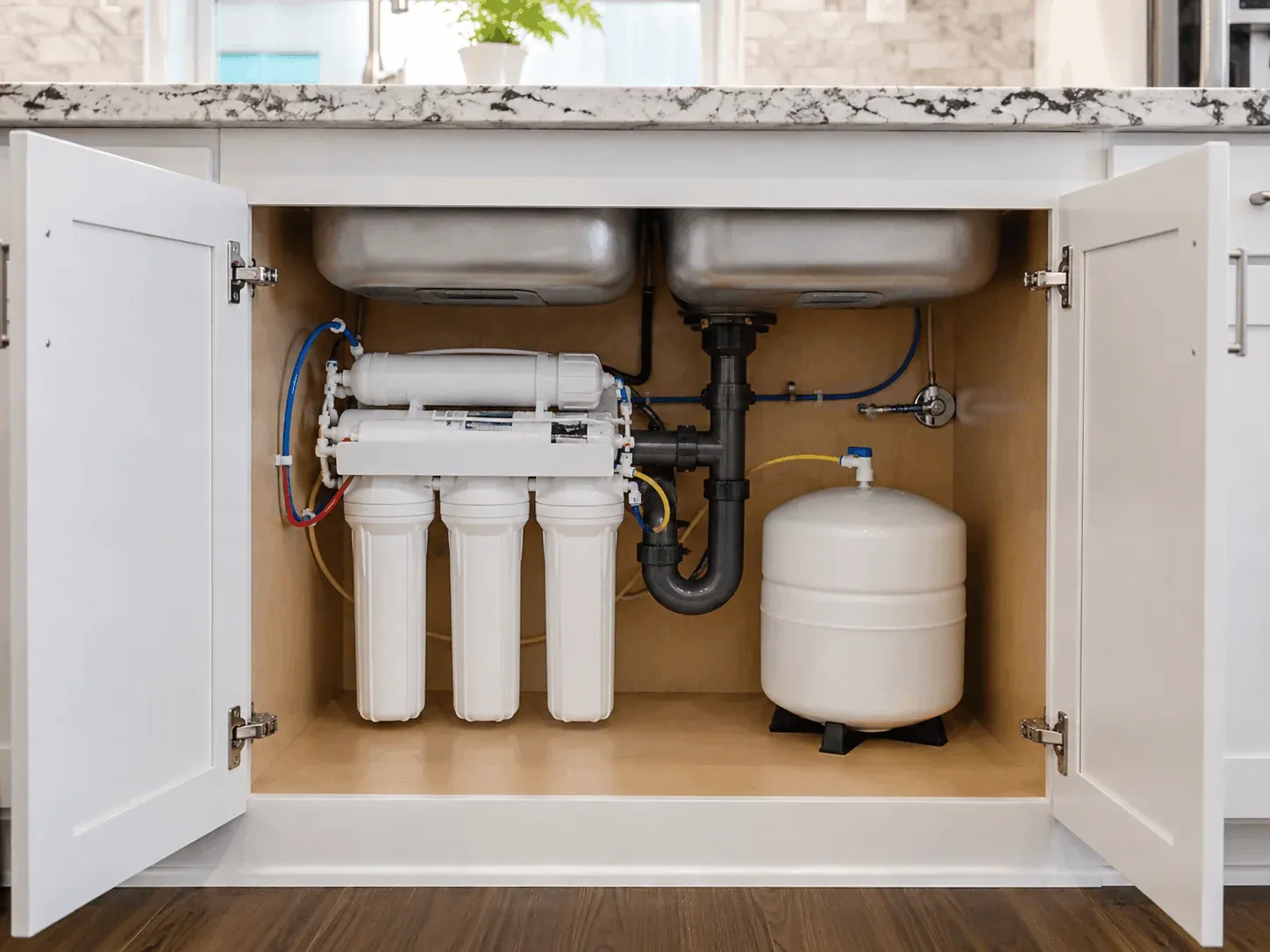
A membrane station is plumbed under one sink and feeds a dedicated faucet, commonly with a line to the refrigerator as well. Its target is dissolved solids, PFAS, lead and residual taste at the tap you drink and cook from, the categories whole house carbon does not reach.
Treating one tap rather than the whole house is what keeps it affordable, and it is why many homes end up running both: filtration for the shower and the laundry, a membrane for the kettle and the glass.
Where each one earns its place in DFW.
Whole house filtration is the lead recommendation in the chloramine markets, Fort Worth, Southlake, Grapevine and Colleyville, and in Mansfield, where the city itself acknowledges seasonal algae-driven taste and odor events that exceed what its treatment carbon can remove.
Reverse osmosis leads where dissolved solids or contaminant context dominate. Melissa is the clearest case in our fourteen: reported total dissolved solids of 455 ppm in the NTMWD Wylie data serving the city is the highest figure across all of our markets, and dissolved solids are the one category neither softening nor carbon filtration reduces.
Answered before you ask.
Can reverse osmosis replace a whole house filter?
No, because it only treats the tap it is plumbed to. If the complaint is a chlorine smell in the shower, an under-sink RO station will not change it. RO replaces bottled water; it does not treat the house.
Does reverse osmosis waste water?
A membrane sends some water to drain as concentrate, that is how rejection works. It is worth weighing against the water and packaging used to produce and transport bottled water for the same household.
If I can only fit one, which?
Answer the complaint. Shower smell and general taste across the house is filtration. Drinking and cooking water specifically, or a PFAS concern, is reverse osmosis. Scale and spotting is neither, that is a softener.
Three readings settle this in twenty minutes.
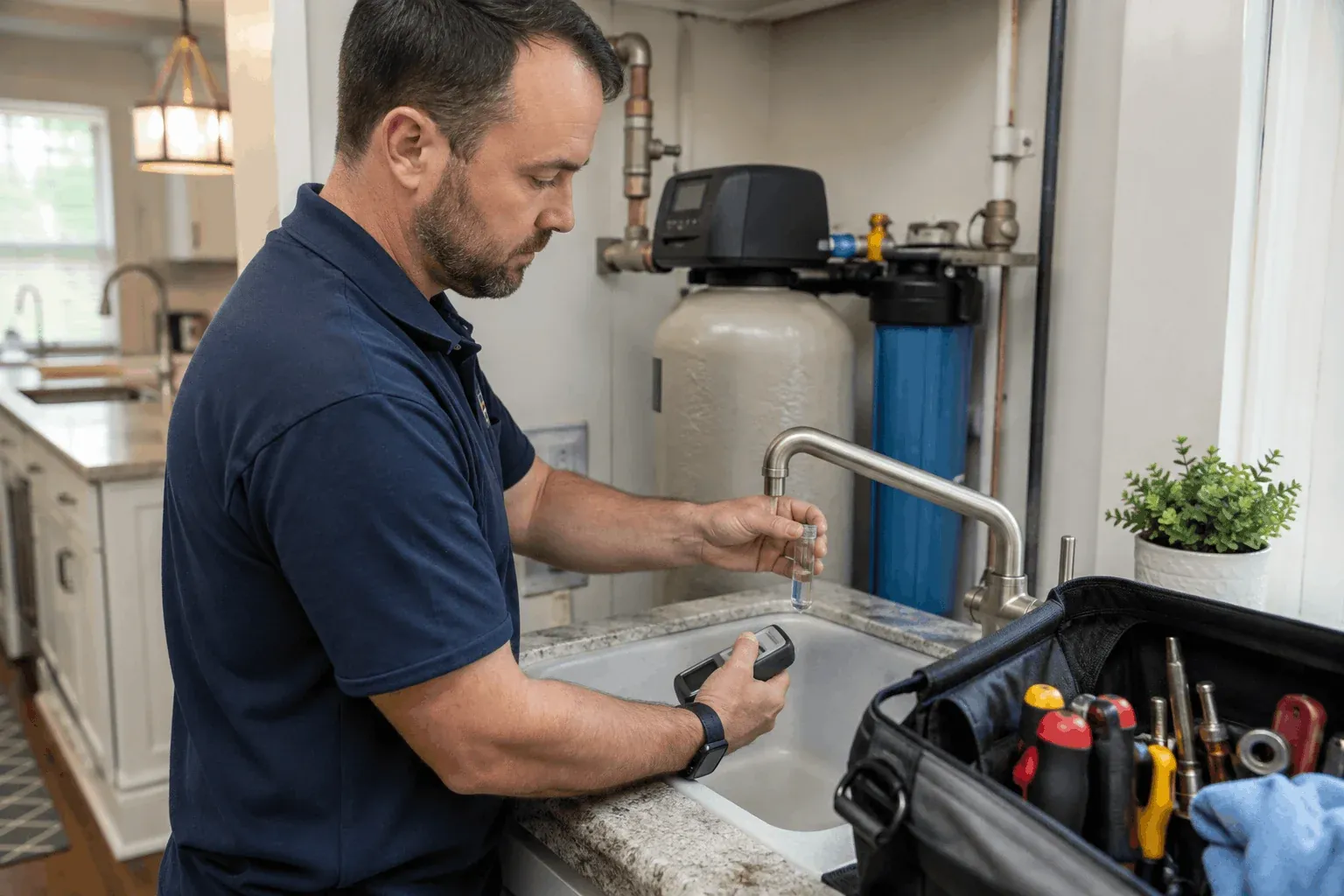
Hardness, chlorine and dissolved solids at your own tap tell you which of the three systems your water actually calls for.