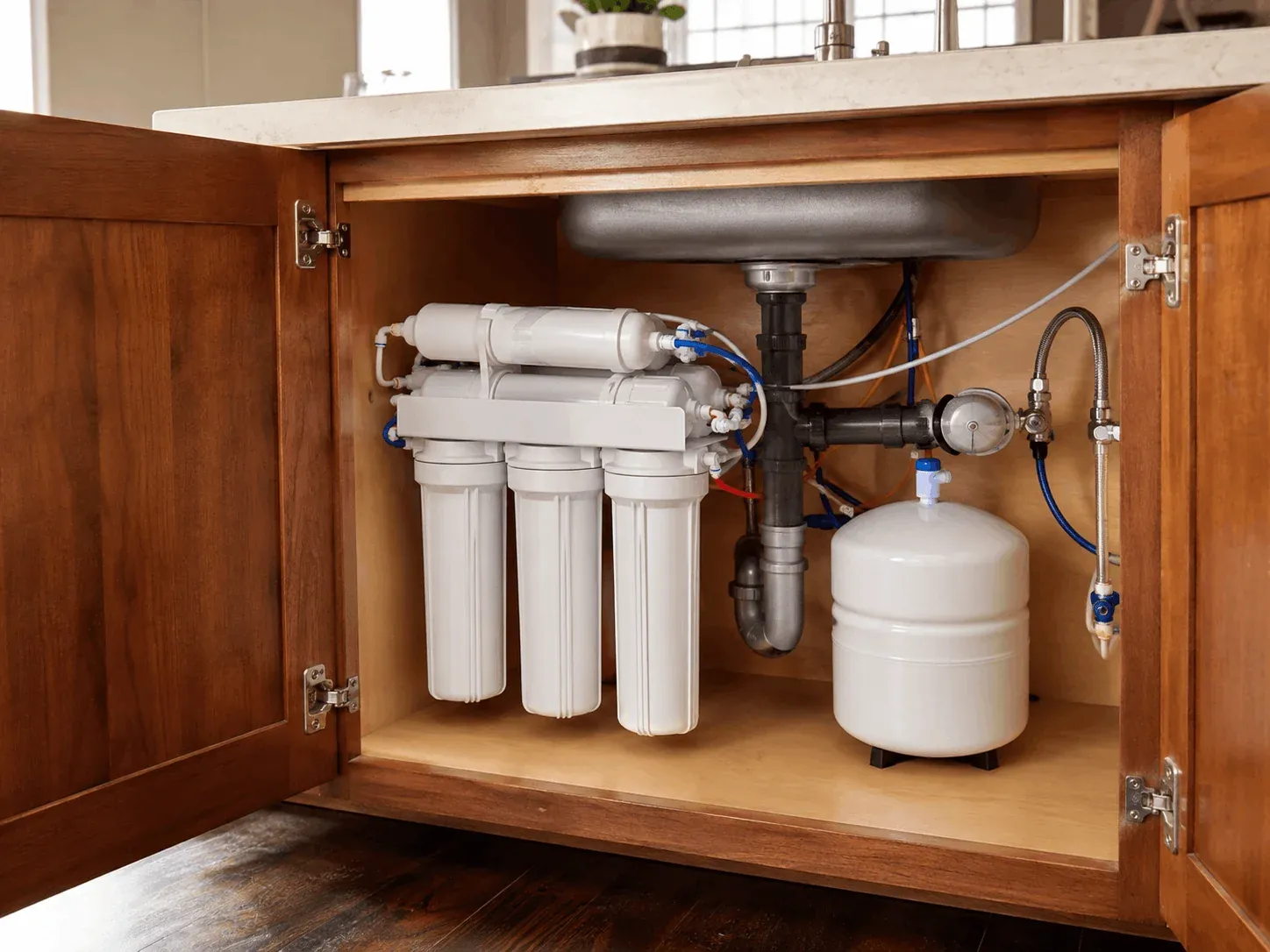
When each RO stage actually needs changing.
A reverse osmosis system does not fail loudly. It drifts, slower flow, taste creeping back, and almost always because a stage went past its interval.
How often should reverse osmosis filters be changed?
Sediment and carbon pre-filters annually in most households, the post-filter annually, and the membrane every several years depending on feed water and use. The pre-stages protect the membrane, so letting them lapse shortens the life of the most expensive component in the system.
| Stage | Typical interval | What it is protecting |
|---|---|---|
| Sediment pre-filter | Annually | Stops particulate reaching the carbon and the membrane |
| Carbon pre-filter | Annually | Removes chlorine, which damages the membrane directly |
| RO membrane | Several years | The component doing the actual rejection |
| Post-filter (polish) | Annually | Final taste polish before the dedicated faucet |
| Storage tank air charge | Check annually | Delivery pressure at the faucet |
If you would rather not work through this yourself, this is what our reverse osmosis installation and service covers, and most of it is a single visit.
Why the pre-stages matter more than they look.
The carbon pre-filter is not there for taste. It is there because free chlorine attacks the membrane material directly. Run a membrane on unprotected chlorinated feed water and you shorten its life substantially, replacing an inexpensive annual cartridge protects the expensive multi-year component.
In the chloramine cities the same logic applies, and it is a reason to check that the pre-stage specification actually matches your supply rather than assuming a generic set.
What drifting performance looks like.
A slow faucet is the classic symptom, and it has three usual causes: spent filters, a tired membrane, or a storage tank that has lost its air charge. The third is the one most often missed, because the filters get changed and the flow does not improve.
Taste returning is usually the post-filter or the membrane. A sudden change rather than a gradual one is worth a call.
Local note: high dissolved solids work the membrane harder.
Reported total dissolved solids of 455 ppm in the NTMWD Wylie data serving Melissa is the highest figure across the fourteen cities we serve. Higher feed TDS means the membrane is doing more work for the same output, which shortens its practical service life relative to a lower-TDS supply.
Answered before you ask.
What happens if I skip a filter change?
The pre-stages stop protecting the membrane, so chlorine and particulate reach it directly. The membrane is the expensive part, and it is the one that a lapsed twenty-dollar cartridge quietly destroys. Flow drops and taste returns before anything fails outright.
Why is my RO faucet slow after changing the filters?
Most likely the storage tank has lost its air charge, which is a separate check from the filters. A tired membrane is the other candidate. Both are quick to diagnose on a service visit.
Can I change RO filters myself?
Many people do. The two things worth getting right are sanitising the housings when you open the system and confirming the replacement cartridges match your feed water, a generic carbon stage is not the same specification as one rated for chloramine supply.
Let us track the schedule for you.
Filters and membrane intervals go on your service schedule, so performance does not quietly drift between visits.